Blue Skies for the Fallen: Memorial Day and the Aviators Who Never Came Home
Memorial Day is not about sales, barbecues, or the unofficial start of summer. It never was. It is about the men and women who put on a uniform, climbed into a cockpit, laced up their boots, or shouldered a rifle, and did not come back. For those of us in the flight sim community, this day carries an extra weight. We spend our free time flying the machines they flew in combat. We practice the maneuvers they had to get right the first time, every time, or die trying. That is not something any of us should take lightly.
This Memorial Day, we want to pause, look up from our screens, and say it plainly: we fly in their honor.
The Aviators We Remember
Between World War I and today, the United States has lost tens of thousands of military aviators in combat and in the line of duty. The numbers are staggering, but numbers do not tell the story. Behind every statistic is a young person, often barely old enough to vote, strapping into a machine held together by rivets and raw American manufacturing muscle, climbing into skies filled with flak, fighters, and everything else the enemy could throw at them.
In World War II alone, the U.S. Army Air Forces lost over 40,000 aircraft and more than 50,000 aircrew in the European and Pacific theaters combined. These were not nameless statistics. They were the sons of farmers and factory workers, of teachers and mechanics. They came from Texas and Ohio and Brooklyn. They flew P-47 Thunderbolts through hellish flak over Germany. They threaded B-17s through fighter screens in broad daylight over Schweinfurt. They dove Dauntlesses into the teeth of the Japanese fleet at Midway.
Korea brought a new kind of air war, jet against jet, and with it a new generation of aviators who answered when called. Vietnam produced some of the most complex and demanding air combat in history, fought under rules of engagement that made already dangerous missions even harder. The Gulf War, Iraq, Afghanistan, and countless operations in between: every era has its aviators who gave everything.
We remember all of them today.
Why the Flight Sim Community Carries This Differently
Here is something that does not get said enough: the flight simulation community has a unique relationship with military aviation history. We are not passive observers. We are not reading about these aircraft in a museum pamphlet or watching a documentary on a Sunday afternoon. We are climbing into virtual cockpits, cold-starting the same engines those pilots started, learning the same emergency procedures, and navigating the same weather, terrain, and threat environments they faced.
When a DCS World pilot straps into the P-47D Thunderbolt and pushes the throttle forward over the Normandy map, they feel something real. The weight of that big radial engine, the way the "Jug" wallows and then surges, the earth dropping away beneath the wings. It is not the same as combat. Nothing ever could be. But it is closer than almost anything else available to a civilian.
When an IL-2: Great Battles pilot winds up on the six o'clock of a Bf 109 over Stalingrad and squeezes the trigger, the scenario they are recreating cost thousands of real lives to produce. That context matters. That distinction matters.
The flight sim community keeps the memory of military aviation alive not through ceremony alone, but through study, through recreation, and through genuine passion for the machines and the missions those aviators flew.
The Aircraft That Connect Us to History
Part of what makes DCS World and IL-2 Great Battles so powerful as memorial tools, if you want to call them that, is the fidelity of the aircraft modeled in these platforms. These are not arcade approximations. They are painstakingly researched, engineering-document-accurate recreations of the real machines.
The P-51D Mustang that escorts your bomber formation in DCS flies with the same control forces, the same quirks, and the same performance envelope that Eighth Air Force pilots dealt with over occupied Europe. The P-47D Thunderbolt absorbs punishment the way the real Jug was famous for, and it hauls bombs and rockets with the same ground-attack versatility that made it legendary. The Spitfire Mk.IX dances in ways that remind you why RAF pilots loved it with a devotion that was almost personal.
In IL-2 Great Battles, the Eastern Front comes alive through aircraft like the La-5, the Yak-1, and the Pe-2, aircraft flown by Soviet aviators who faced the Luftwaffe with everything they had under conditions that were genuinely brutal. The Fw 190 A and the Bf 109 series on the German side are modeled with equal care, because understanding history means understanding all sides of it.
These modules exist because real engineers built the real aircraft. Real pilots flew them. Real mechanics kept them flying. The simulation community's obsession with getting the details right is, in its own way, a form of honor.
Missing Man Formation: A Virtual Tradition
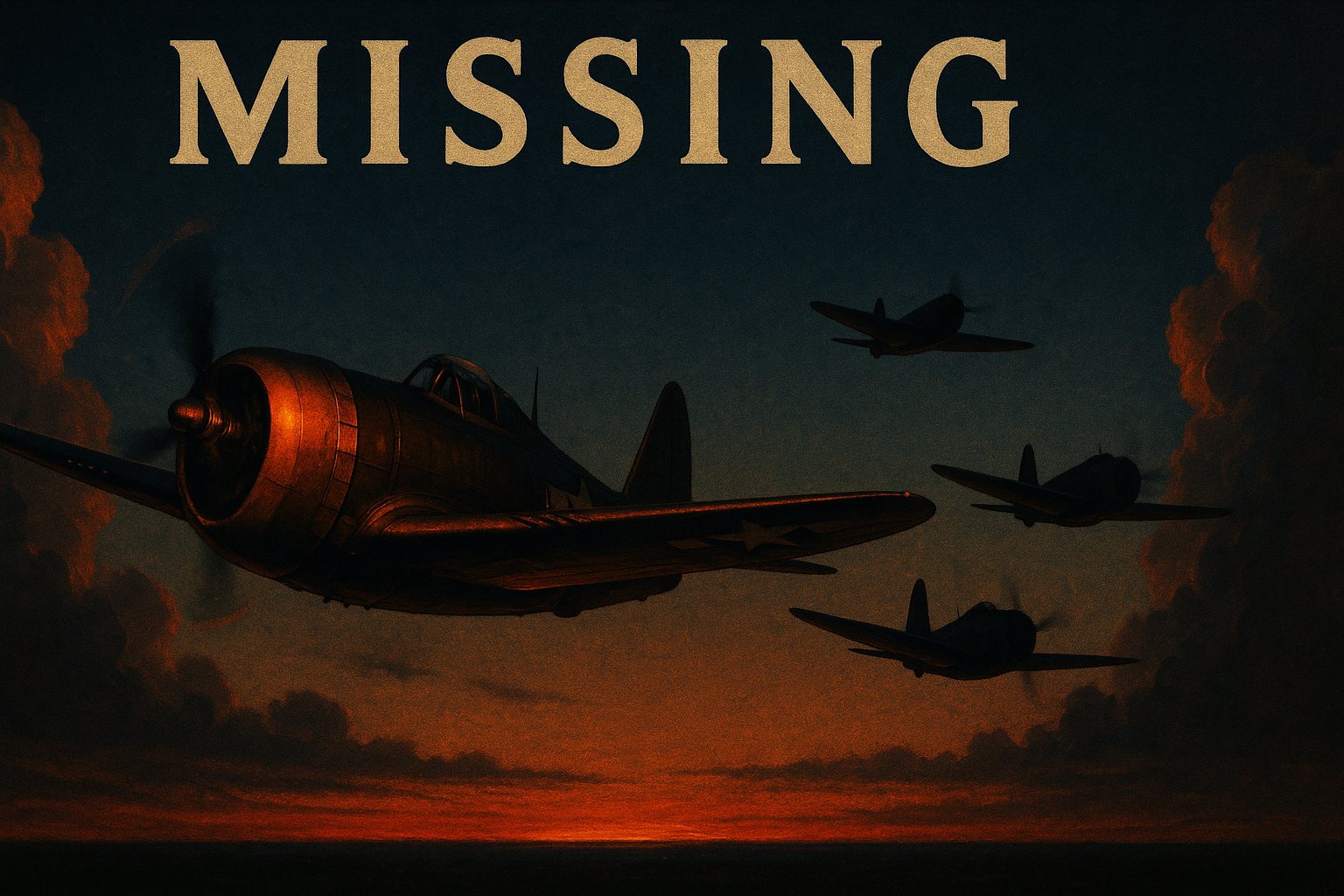
If you have ever participated in a virtual Missing Man Formation, you know what it means. It is a simple thing: a flight of aircraft in formation, one slot visibly empty, flying over a target or a landmark to honor a fallen pilot. The tradition comes directly from real military aviation, and in the flight sim world, it carries the same weight.
Squadrons and groups in DCS and IL-2 hold these formations on Memorial Day, Veterans Day, and when the community loses one of its own. Flying in a Missing Man Formation on a DCS server, in disciplined silence over the channel or the Pacific, is one of those moments where the hobby stops feeling like a hobby. It becomes something else. Something quieter and more important.
If your squadron or group is planning one this Memorial Day weekend, fly it with intention. Hold your spacing. Keep your radio discipline. Let the empty slot speak.
How You Can Fly in Their Honor This Weekend
You do not need a formal event to make this weekend meaningful. Here are a few ways to fly with purpose:
- Load a historical mission. The DCS and IL-2 communities have produced extraordinary free missions based on real operations. Fly the Doolittle Raid recreation. Run a Schweinfurt bombing mission. Fly a Chosin Reservoir close air support scenario.
- Study the aircraft you fly. Spend ten minutes reading about the real history of the module you love most before you start your next session. The USAF Historical Research Agency, the National Museum of the United States Air Force, and the National WWII Museum are all incredible free resources.
- Hold a formation flight. Gather your squadron or a few friends, pick a historically significant map, and fly together deliberately. No combat. Just flight.
- Donate to a veterans organization. K9s For Warriors, the Intrepid Fallen Heroes Fund, and the Air Force Memorial Foundation are all worth your support.
- Say the names. If you know the history of the aircraft you fly, find out who flew it in combat. Learn a name. Remember it.
Fox3 Flies in Their Honor
Here at Fox3 Managed Solutions, we build and run the servers that keep the DCS and IL-2 communities airborne. That is our job, and we love it. But on days like this, we want to be clear about something bigger than server uptime and bandwidth.
We built this company around a passion for flight simulation, and that passion was always downstream of something real: the actual history, the actual aircraft, and the actual human beings who flew them in combat. Every stable server we spin up, every mission that runs without crashing, every squadron that gets to complete a full flight, is one small act of keeping that history alive and accessible.
This Memorial Day, we are thinking about the aviators who never got to come home. We are grateful for what they gave. And we think the best thing we can do, in our small corner of the simulation world, is make sure the virtual skies where their memory lives stay open and flying.
Blue skies, wherever they are now.
Frequently Asked Questions
Why does the flight sim community have a special connection to Memorial Day and military aviation history?
Flight simulators like DCS World and IL-2 Great Battles model the actual aircraft flown in combat with a level of fidelity that puts players closer to the real experience than almost any other medium. When sim pilots learn the systems, limitations, and handling of a P-47 or a Spitfire, they develop a genuine understanding of what real aviators faced. That connection makes military history personal in a way that reading or watching rarely achieves.
Which DCS World modules are best for flying historically significant Memorial Day missions?
The P-51D Mustang, P-47D Thunderbolt, Spitfire Mk.IX, and the F-86 Sabre are all excellent choices for Memorial Day flying. Each represents a distinct era of American and Allied air combat history, from WWII escort and ground attack missions through the first jet-age air war over Korea. The community has built free missions for each of them that recreate real historical operations.
What is a Missing Man Formation in flight simulation?
The Missing Man Formation is a real military aviation tribute flown at funerals and memorial ceremonies to honor fallen aviators. One aircraft in a tight formation pulls away sharply upward, leaving a visible gap, representing the missing pilot. The flight sim community recreates this formation on DCS and IL-2 servers as a genuine tribute, particularly on Memorial Day and Veterans Day.
Are there organized Memorial Day events in the DCS World community?
Yes, various DCS squadrons, groups, and server communities organize formation flights, historical missions, and memorial events around Memorial Day weekend. The best way to find them is through the DCS official forums, Reddit's r/hoggit community, and individual squadron Discord servers. Fox3 Managed Solutions also hosts community events, and our Discord is a good place to look for what is happening in the broader community.
How does flying historical aircraft in DCS or IL-2 help preserve military aviation history?
By modeling these aircraft at engineering-accurate fidelity, simulators create a living record of how these machines actually flew, including their strengths, weaknesses, and operational limitations. Players who fly them deeply often become genuinely knowledgeable about the historical context. That knowledge tends to generate broader interest in the real history, the real missions, and the real people involved. Simulation communities have driven real-world interest in aviation museums, veteran interviews, and historical research for decades.
What veterans organizations should flight sim pilots consider supporting on Memorial Day?
A few worth knowing: the K9s For Warriors project supports combat veterans with service dogs and is an organization Fox3 has raised funds for directly. The Intrepid Fallen Heroes Fund supports families of military personnel lost in service. The National Museum of the United States Air Force in Dayton, Ohio, preserves the actual aircraft these simulators model. Any of these are worthy of your support this weekend.
We hope you get some good flight time in this Memorial Day weekend. Fly something historical. Fly it well. And if you need a solid, stable server to fly it on, you know where to find us. Fox3 Managed Solutions keeps the virtual skies open so the community can do what it does best: honor the past, fly the present, and keep the passion for military aviation alive for whoever comes next.
Happy Flying, and thank you to all who served.
From Fox3 Managed Solutions
Ready to fly?
Get a fully managed DCS World or IL-2 server. Most customers are flying within an hour.